Loading
Loading




History of Puthanchanta Sri Ujjaini Mahakali Amman Devasthanam
The history of Puthanchanta Sri Ujjaini Mahakali Amman Devasthanam is believed to date back nearly 850 years, making it one of the ancient and spiritually significant shrines in the heart of present-day Thiruvananthapuram. Revered as “Dakshina Ujjaini” (Southern Ujjaini), the temple carries a unique blend of historical tradition, royal patronage, and divine prophecy.
The Divine Origin
Centuries ago, during the glorious era of the Chola dynasty, when the great Brihadeeswarar Temple (popularly known as Thanjai Periya Kovil / Thiruvudaiyar Kovil) was being constructed under the reign of Rajaraja Chola I, there lived a gifted master sculptor (Karanaavar) near Naguneri, in a village known as Moolakarupatti. He was a deeply devoted worshipper of Sri Ujjaini Mahakali.
According to temple tradition, one night the divine mother appeared before him in a dream and blessed him with a prophecy:
“You are destined to become part of a great construction that the world shall admire. But before that, you must come to Ujjaini and seek my darshan.”
The following morning, messengers of King Rajaraja Chola arrived at his residence, inviting him to contribute his extraordinary sculptural skill to the construction of the great Periya Kovil at Thanjavur. Realizing the truth of the divine message, the sculptor began his pilgrimage to Ujjain to seek the blessings of Mahakali.
Temple lore narrates that during this sacred journey, he faced danger from bandits and fled into a forest. There, a mysterious woman appeared, offering him water, food, and guidance to the temple of Ujjaini Mahakali. That night, the goddess again appeared in his dream and revealed the following:
“The woman who guided you was none other than me. Your life’s purpose is to establish my divine presence in the South. I shall travel with you.”
When the sculptor humbly asked where in the South she wished to reside, the goddess replied:
“In the North, I dwell in the land of Mahadeva. In the South, my abode shall be in the land of Narayana. But first, establish me in your homeland. In time, I shall journey to the land destined for me.”
Following the divine command, the sculptor returned to Moolakarupatti and consecrated Sri Ujjaini Mahakali alongside Ayyanar Swami while continuing his role in the construction of the Thanjavur Periya Kovil.
The Arrival in Venad
Several centuries later, during the rule of the kings of Venad, when major temple construction works, including the sacred Sree Padmanabhaswamy Temple, were undertaken, skilled sculptors from the lineage associated with the Periya Kovil tradition were invited to Venad.
The royal representatives traced these artisan families to Moolakarupatti, near Naguneri. Remembering the divine prophecy of the Goddess regarding her future abode in the “Land of Narayana", the sculptors agreed to migrate — on one sacred condition: that Sri Ujjaini Mahakali and Ayyanar Swami accompany them and that proper land be granted for worship.
The Maharaja of Venad graciously accepted their request. The sculptors and their families journeyed to Thiruvananthapuram, carrying the sacred presence of Sri Ujjaini Mahakali in a palanquin, accompanied by Ayyanar Swami.
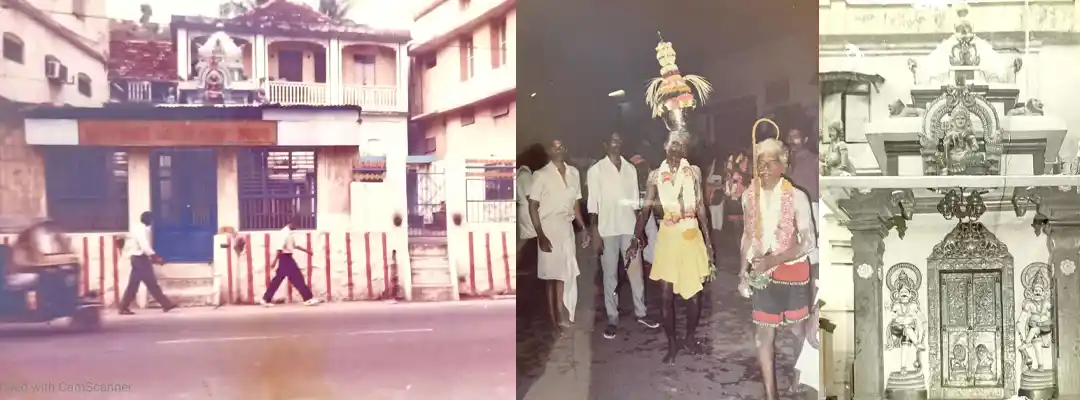
The royal family granted them residence along Rajaveethi and allocated a sacred site for the worship of the Goddess — the very place where the temple stands today, in what came to be known as Puthanchanta.
Initially worshipped in a simple earthen shrine, the deity gradually came to be enshrined in a temple structure over centuries. Historical accounts also state that the Maharaja granted ownership rights of the temple land to the sculptor families who maintained the sacred traditions.
Temple Traditions and Legacy
Ancient temple traditions indicate that Mrigabali (animal sacrifice) was practised here in earlier centuries as part of the customary rituals of the time. It is also believed that kings once visited this temple to offer prayers and place their Udavaal (royal sword) at the feet of the Goddess before entering battle, seeking divine blessings and victory.
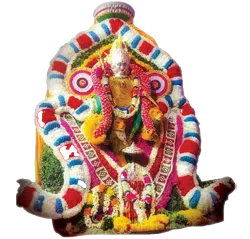
Today, the temple continues to be a powerful centre of devotion and spiritual heritage. The presiding deity is Sri Ujjaini Mahakali Amman, accompanied by revered sub-deities including Bhairava Swami, Ganapati Bhagwan, Ayyappan Swami, Ishakki Amman, Agni Madan Thampuran –Yakshi Amman, Malamadan Thampuran –Yakshi Amman, and the sacred Nagas — Nagaraja, Nagayakshi, and Nagakanyaka.
The annual temple festival is celebrated during the last Monday, Tuesday, and Wednesday of the Malayalam month of Kumbha, with the grand Chaprathil Procession of Amman on the last Tuesday being the principal event. Sacred rituals such as Villu Pattu, Abhishekam, Pongala, Pushpabhishekam, and Guruthi Puja continue to preserve the temple’s centuries-old spiritual traditions.
Thus stands today Puthanchanta Sri Ujjaini Mahakali Amman Devasthanam, cherished by devotees as Dakshina Ujjaini – a divine seat where history, faith, royal patronage, and sacred prophecy unite in timeless devotion.